Finland’s strained public finances leave little room for error. For Youssef Zad, that makes one thing clear. Growth funding needs to be far more deliberate.

“We are operating within very tight constraints,” says Zad, who recently moved from the startup world into politics. “That means we have to be extremely deliberate about where we allocate resources for growth.”

Earlier this month, Zad moved from chief economist at the Finnish Startup Community to a one-year economist position within the Social Democratic Parliamentary Group. The shift brings him closer to policymaking, even if indirectly. “I don’t hold decision-making power myself,” he notes, “but I now have a more direct channel to contribute ideas that shape policy.”

Capital is more pressing than talent in scaling phase

If one constraint stands out in his thinking, it is capital, though not at the expense of talent. “Talent is a challenge, but it is manageable through policy,” he explains, pointing to immigration and tax incentives. “The more pressing issue is access to capital.”

He notes that the United States has built much of its innovation capacity on the back of highly skilled immigration, a model Europe could draw from. In that sense, the talent question is solvable. Capital, however, becomes decisive as companies scale. “Competing with the scale of investment in the United States is difficult, and Europe needs stronger local funding mechanisms.”

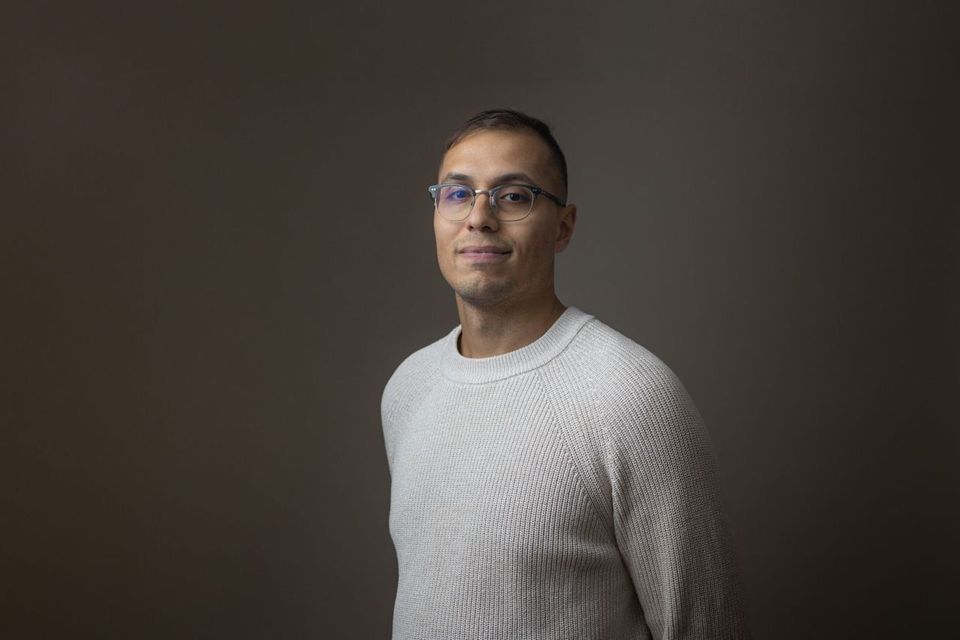
Before his latest appointment, Zad served the Finnish Startup Community first as an economist and later as chief economist for four years. Photo provided by Zad.

That perspective reflects his background in the startup ecosystem, where access to funding often determines whether ideas scale. The move into politics, however, has changed the pace of decision-making. “The biggest change is the pace of work,” he says. In the startup world, there is time to analyze and reflect. In politics, decisions move quickly. “You have to respond in real time, often without the luxury of deep background work.”

The shift itself is less ideological than it might appear. “Founders tend to be pragmatic. They are willing to work with any party that brings forward good ideas.” His own path followed a similar logic. “This wasn’t a predetermined choice. It evolved over time through collaboration and dialogue.”


Growth through technology

What remains consistent is his view on growth. “Sustainable economic growth ultimately comes from technological progress. Small, young companies are often the ones driving those breakthroughs.”

Artificial intelligence is a clear example. “AI is a foundational technology, comparable to electricity or the steam engine. The key question is not only who builds the best models, but who applies them most effectively across industries.”

He also sees a growing overlap between defense and energy policy. “Security today extends beyond traditional defense. It includes energy resilience and the ability to maintain critical systems under pressure.” Technologies that strengthen both areas, from renewable energy to dual-use innovations, are likely to play a larger role.

At the same time, innovation can emerge from less obvious sectors. He points to Finnish company Solar Foods, which produces a protein using a fermentation process powered by air and solar energy. “If food production can be decoupled from geography, it fundamentally changes how we think about supply chains and resilience.”

Underlying his thinking is a broader critique of Finland’s economic conversation. “There is a strong focus on fiscal adjustments and spending cuts,” he says. “But we need a more forward-looking discussion about growth. Without that, it becomes difficult to build a credible long-term strategy.”

For now, Zad is still adjusting to his new role, with his attention firmly on one issue: how to convert innovation into long-term economic growth.

|

|

Leaders

Finland needs a more forward-looking discussion about growth, says SDP Economist Youssef Zad

Finland needs a more forward-looking discussion about growth, says SDP Economist Youssef Zad

·

5 min read

Credit: Youssef Zad

Credit: Youssef Zad

Finland’s strained public finances leave little room for error. For Youssef Zad, that makes one thing clear. Growth funding needs to be far more deliberate.

“We are operating within very tight constraints,” says Zad, who recently moved from the startup world into politics. “That means we have to be extremely deliberate about where we allocate resources for growth.”

Earlier this month, Zad moved from chief economist at the Finnish Startup Community to a one-year economist position within the Social Democratic Parliamentary Group. The shift brings him closer to policymaking, even if indirectly. “I don’t hold decision-making power myself,” he notes, “but I now have a more direct channel to contribute ideas that shape policy.”

Capital is more pressing than talent in scaling phase

If one constraint stands out in his thinking, it is capital, though not at the expense of talent. “Talent is a challenge, but it is manageable through policy,” he explains, pointing to immigration and tax incentives. “The more pressing issue is access to capital.”

He notes that the United States has built much of its innovation capacity on the back of highly skilled immigration, a model Europe could draw from. In that sense, the talent question is solvable. Capital, however, becomes decisive as companies scale. “Competing with the scale of investment in the United States is difficult, and Europe needs stronger local funding mechanisms.”

Before his latest appointment, Zad served the Finnish Startup Community first as an economist and later as chief economist for four years. Photo provided by Zad.

That perspective reflects his background in the startup ecosystem, where access to funding often determines whether ideas scale. The move into politics, however, has changed the pace of decision-making. “The biggest change is the pace of work,” he says. In the startup world, there is time to analyze and reflect. In politics, decisions move quickly. “You have to respond in real time, often without the luxury of deep background work.”

The shift itself is less ideological than it might appear. “Founders tend to be pragmatic. They are willing to work with any party that brings forward good ideas.” His own path followed a similar logic. “This wasn’t a predetermined choice. It evolved over time through collaboration and dialogue.”

Our Pulse newsletter

Your weekly leadership intelligence briefing.

What happened, why it matters, and what to watch across every CEO, board, and executive move in Nordic listed companies, starting with Finland. Fast, factual, and to the point.

Delivered every Monday.

By signing up, you agree to our Privacy Policy

Our Pulse newsletter

Your weekly leadership intelligence briefing.

What happened, why it matters, and what to watch across every CEO, board, and executive move in Nordic listed companies, starting with Finland. Fast, factual, and to the point.

Delivered every Monday.

By signing up, you agree to our Privacy Policy

Growth through technology

What remains consistent is his view on growth. “Sustainable economic growth ultimately comes from technological progress. Small, young companies are often the ones driving those breakthroughs.”

Artificial intelligence is a clear example. “AI is a foundational technology, comparable to electricity or the steam engine. The key question is not only who builds the best models, but who applies them most effectively across industries.”

He also sees a growing overlap between defense and energy policy. “Security today extends beyond traditional defense. It includes energy resilience and the ability to maintain critical systems under pressure.” Technologies that strengthen both areas, from renewable energy to dual-use innovations, are likely to play a larger role.

At the same time, innovation can emerge from less obvious sectors. He points to Finnish company Solar Foods, which produces a protein using a fermentation process powered by air and solar energy. “If food production can be decoupled from geography, it fundamentally changes how we think about supply chains and resilience.”

Underlying his thinking is a broader critique of Finland’s economic conversation. “There is a strong focus on fiscal adjustments and spending cuts,” he says. “But we need a more forward-looking discussion about growth. Without that, it becomes difficult to build a credible long-term strategy.”

For now, Zad is still adjusting to his new role, with his attention firmly on one issue: how to convert innovation into long-term economic growth.

Nordic Listed Leaders Board Programme

Learn board work from
the people who do it.

Harvard cases, coaching and open dialogue with people who sit on and work with boards of Finnish publicly listed companies.

Next cohort

19 November 2026

Then January, April, August and October 2027

Nordic Listed Leaders Board Programme

Learn board work from
the people who do it.

Harvard cases, coaching and open dialogue with people who sit on and work with boards of Finnish publicly listed companies.

Next cohort

19 November 2026

Then January, April, August and October 2027

Topics

# Topics

Authors

Emmi Laine is head of business content at Listeds and our lead for finance and business coverage. She sets the editorial agenda, interviews Nordic business leaders, and writes stories, newsletters, and social content on timely market and corporate topics. Emmi brings nearly eight years of experience from Shanghai's Yicai Global / Yicai Media Group, where she was awarded for reporting on China’s economy, finance sector, and technology innovation. She holds an MSc in Innovation and Entrepreneurship from ESADE Business School in Barcelona and a Master’s degree in International Design Business Management from Aalto University. She also holds a Bachelor’s degree in Culture Studies with a major in Journalism from Stockholm University and has studied Mandarin Chinese and Chinese culture. Emmi is a Finnish citizen and has lived in Finland, Sweden, China, and Portugal.

Emmi Laine is head of business content at Listeds and our lead for finance and business coverage. She sets the editorial agenda, interviews Nordic business leaders, and writes stories, newsletters, and social content on timely market and corporate topics. Emmi brings nearly eight years of experience from Shanghai's Yicai Global / Yicai Media Group, where she was awarded for reporting on China’s economy, finance sector, and technology innovation. She holds an MSc in Innovation and Entrepreneurship from ESADE Business School in Barcelona and a Master’s degree in International Design Business Management from Aalto University. She also holds a Bachelor’s degree in Culture Studies with a major in Journalism from Stockholm University and has studied Mandarin Chinese and Chinese culture. Emmi is a Finnish citizen and has lived in Finland, Sweden, China, and Portugal.

Authors

Journalist

Emmi Laine is head of business content at Listeds and our lead for finance and business coverage. She sets the editorial agenda, interviews Nordic business leaders, and writes stories, newsletters, and social content on timely market and corporate topics. Emmi brings nearly eight years of experience from Shanghai's Yicai Global / Yicai Media Group, where she was awarded for reporting on China’s economy, finance sector, and technology innovation. She holds an MSc in Innovation and Entrepreneurship from ESADE Business School in Barcelona and a Master’s degree in International Design Business Management from Aalto University. She also holds a Bachelor’s degree in Culture Studies with a major in Journalism from Stockholm University and has studied Mandarin Chinese and Chinese culture. Emmi is a Finnish citizen and has lived in Finland, Sweden, China, and Portugal.

All Listeds newsletters (bundle)

One sign-up, the full picture.

Get every Listeds newsletter: the daily signal drumbeat, the weekly Pulse briefing, the monthly Best of the Month, the CEO letter, and the Weekend read.

By signing up, you agree to our Privacy Policy

All Listeds newsletters (bundle)

One sign-up, the full picture.

Get every Listeds newsletter: the daily signal drumbeat, the weekly Pulse briefing, the monthly Best of the Month, the CEO letter, and the Weekend read.

By signing up, you agree to our Privacy Policy

Latest signalsLive feed
Moves trackerLive feed

Nordic Listed Leaders Board Programme

Learn board work from
the people who do it.

Harvard cases, coaching and open dialogue with people who sit on and work with boards of Finnish publicly listed companies.

Next cohort

19 November 2026

Then January, April, August and October 2027

Latest on Listeds

Executive Intelligence

Nineteen of 32 Helsinki large caps raised board fees this spring, and none cut

Board pay at Helsinki's large caps went one way this spring. Nineteen of the 32 boards raised their chair fee at the 2026 annual general meetings, 13 kept it unchanged, and none cut any fee.

Most raises were modest. Counting the boards that held, the typical chair fee rose 2.8%. Among the 19 boards that raised it, the typical increase was 5.2%. Eight raised it by less than 5%, seven by between 5% and 10%, and four by 10% or more.

Nineteen of 32 boards raised the chair fee; none cut it
Helsinki large caps by change in the annual chair fee, 2026 AGM against 2025
03691215Number of companies13Unchanged8Under 5%75% to under 10%410% or more
SSAB and Telia changes measured in kronor.
Source: Listeds board remuneration data, AGM resolution releases 2025 and 2026

Neste, Fortum and Sanoma made the biggest raises

Neste moved furthest. Its chair fee rose 18.2%, from €165,000 to €195,000, and its member fee 10.7% to €83,000. Fortum raised its chair fee 12.9%, from €155,000 to €175,000. Sanoma raised its chair fee 11.1% to €160,000, and its vice chair fee 19.0%, from €84,000 to €100,000, the biggest increase for any board role in the segment (Sanoma AGM release).

The fourth raise of 10% or more was Nordea's, which took its chair fee to €440,000, level with Nokia. Part 1 of this series looked at that move in detail.

The raises were spread across the table, not just among low payers

This was not a round of low-paying boards catching up. A year earlier, the boards that went on to raise their chair fee and the boards that held it had the same typical chair fee, €160,000.

At the very top, most boards held. Nokia, UPM, Stora Enso and KONE, four of the six highest payers, left every fee unchanged.

Board members got similar raises to their chairs

The rest of the board was not left behind. Nineteen boards also raised the fee for ordinary members. At the boards that raised fees, the typical increase was 5.2% for the chair, 5.3% for the vice chair and 4.4% for members, so the gap between the roles hardly changed.

In total, the chairs of the 32 large caps are now paid about €5.6 million a year, roughly €205,000 more than in 2025.

Executive Intelligence

Nordea catches Nokia at the top of Helsinki board pay

Nordea raised its chair fee by 10% this spring, to €440,000 a year. Its chair is now paid exactly as much as Nokia's, and both earn far more than the chair of any other Helsinki large cap.

A year ago Nordea paid its chair €400,000, the second-highest fee in the segment. This year's annual general meeting added €40,000. Nokia kept its chair fee unchanged at €440,000.

The gap to the rest is wide. The third-highest chair fee is Sampo's €250,000, followed by UPM at €240,000. The typical large cap chair earns €166,500, so Nordea and Nokia pay their chairs about 2.6 times as much.

Nordea now pays its chair as much as Nokia
Ten highest annual chair fees among Helsinki large caps, 2026 AGMs
Nokia€440,000Nordea€440,000Sampo€250,000UPM€240,000Stora Enso€221,728KONE€220,000Wärtsilä€212,000SSAB*€203,700Telia*€199,500Neste€195,000€0€100k€200k€300k€400k€500k€600k
*Set in SEK, converted at the ECB reference rate on the AGM date (SEK 10.8485 per euro for SSAB on 28 April 2026; SEK 10.8765 for Telia on 9 April 2026) and rounded to the nearest €100.
Source: Listeds board remuneration data, AGM resolution releases 2026

Nordea gave its chair a bigger raise than the rest of its board

The rest of the Nordea board received smaller raises. Ordinary members went up 3.1%, to €115,500, and the vice chair 5.6%, to €190,000. As a result, Nordea's chair now earns 3.8 times what an ordinary board member earns, up from 3.6 times a year ago. No other large cap has a wider gap between its chair and its members.

Nokia pays every board seat at the top of the market

Nokia spreads its money differently. An ordinary member of the Nokia board earns €185,000 a year, more than the chair is paid at 21 of the 32 large caps. Nokia's vice chair earns €210,000, the highest vice chair fee in the segment. Nordea pays most for the chair; Nokia pays the most, or joint most, for every seat.

The top fee has not risen, but two boards now pay it

For nomination boards preparing next year's proposals, the highest chair fee in Helsinki has not moved: Nokia already paid €440,000 in 2025. What has changed is that it is no longer a single outlier. Two of the largest boards in the market now pay the same top fee, and no other board comes close.

Join our Pulse, Best-of-the-Week, and Weekend newsletters

Join our Pulse, Best-of-the-Week, and Weekend newsletters